 English
 Русский
Hosting provider PrivateApls has released a beta version of its new client dashboard, introducing a fully rebuilt control panel developed entirely in-house. No CMS, no third-party frameworks, and no external trackers were involved — a design choice that feels almost old-fashioned in an industry that usually prefers to outsource everything except the billing emails.
A Zero-Trust Dashboard Without Black Boxes
The new platform is built around a zero-trust architecture, with end-to-end encryption (E2EE) for sensitive operations and a strict no-logs policy. In practical terms, the dashboard is meant to manage infrastructure without quietly collecting a second set of data about the user.
On the usability side, service pages have been redesigned with clearer layouts, category filters, and a search function to find any service without playing hide-and-seek. Network sections now display full subnet information for each service, and IPMI access for dedicated servers is available directly from the network tab, paired with a dedicated VPN profile for secure remote management.
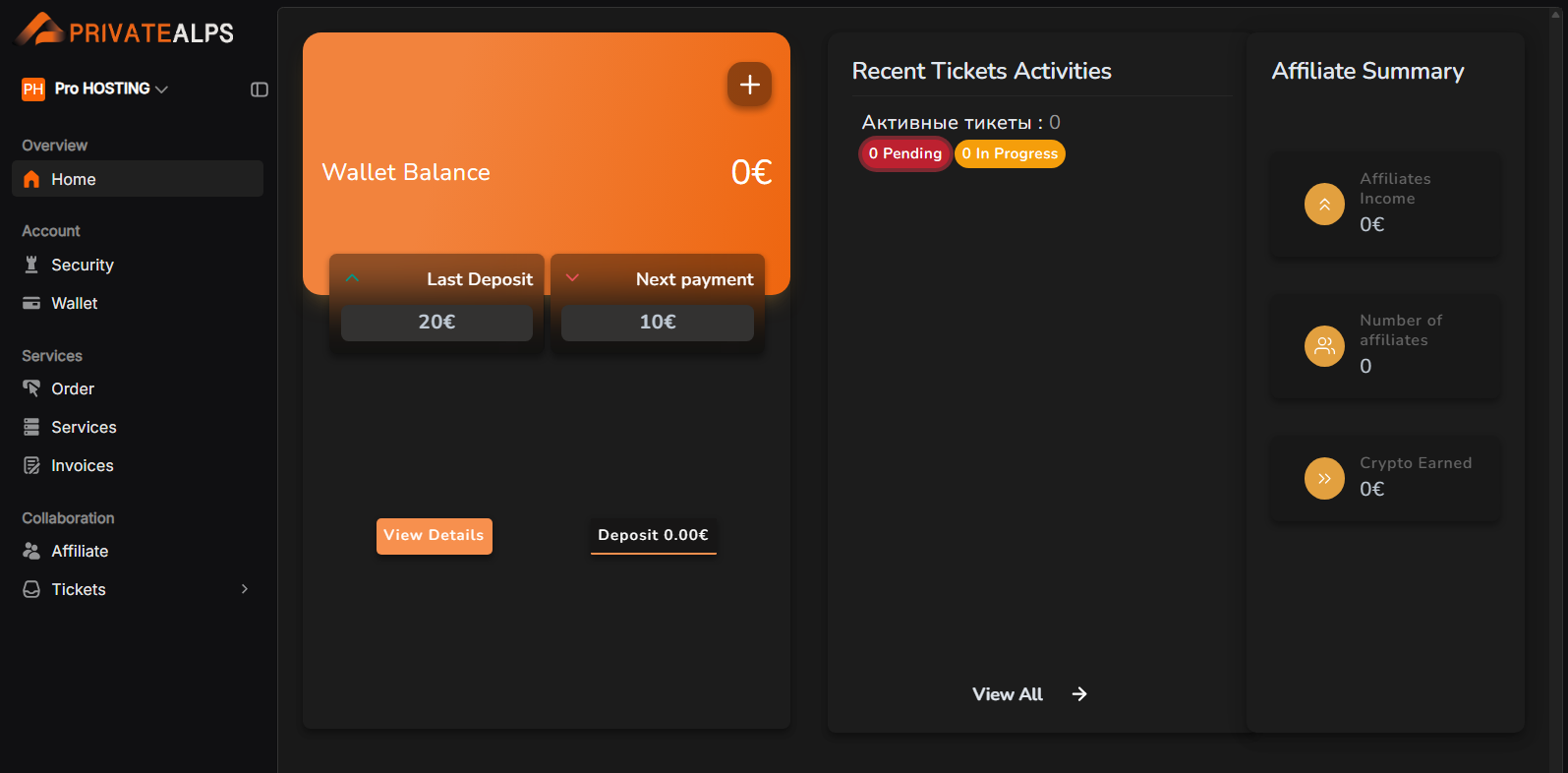
Private Alps user dashboard
A new tagging system allows services to be sorted and grouped by use case, which becomes useful the moment an infrastructure grows beyond a couple of lonely servers.
Billing and Affiliate Tools, Rewritten
Renewals and billing management have also been overhauled, with cleaner workflows and better visibility into balances, service lifecycles, and upcoming payments — fewer clicks, fewer opportunities to get lost.
The affiliate system has gone through a full rewrite as well. It now includes automated withdrawals to a crypto wallet, along with more detailed statistics covering earnings, referred users, and partner rankings. Transparency and automation appear to be the main goals, which is usually preferable to guessing where last month’s commission went.
PrivateApls notes that this is still a beta release, and the final version will evolve based on user feedback. For now, the new dashboard looks like an attempt to replace the traditional hosting control panel chaos with something that resembles an actual workspace rather than a museum of mismatched buttons.