 English
 Русский

SAS (Serial Attached SCSI) is a high-performance storage interface designed to connect hard drives, solid-state drives, and RAID controllers in enterprise systems. It is widely used in servers and data centers where large data volumes, high throughput, and reliability are critical.
The SAS standard was developed by the International Committee for Information Technology Standards (INCITS) and was first introduced in 2004. It was created as the successor to the older parallel SCSI interface, offering higher speeds, better scalability, and more reliable connections through a serial architecture.
Advantages of SAS
-
One of the main benefits of SAS is its high performance. Modern SAS standards support data transfer rates of up to 22.5 Gbit/s, which is significantly higher than what traditional SATA interfaces can provide.
-
SAS is also known for its reliability and durability. It is designed to operate under heavy workloads and in 24/7 environments, making it well suited for enterprise servers and storage systems.
-
Another advantage is flexibility. SAS supports both HDDs and SSDs and allows features such as hot-swapping, enabling disks to be replaced without shutting down the system.
Disadvantages of SAS
-
The primary drawback of SAS is cost. Drives, controllers, and related infrastructure are more expensive than comparable SATA-based solutions.
-
In addition, SAS systems are more complex to configure and maintain, often requiring specialized hardware and trained technical staff, which increases operational expenses.
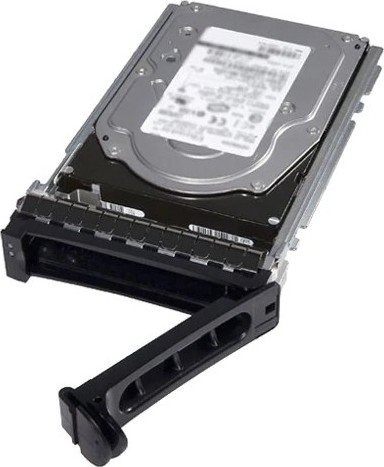
Dell 10K 2.5" SAS hard drive with 1.2TB capacity. Image: elmir.ua
According to industry analysts, SAS is used in around 70% of enterprise server systems worldwide. It remains a key technology in modern data centers, where performance, stability, and data integrity are far more important than minimizing hardware costs.